| |
| Thursday, 12 November 2026 |
| Mary Cassatt’s Unconventional Women |
| Sarah Jaffray |
 |
In 1913 the impressionist Mary Cassatt (1844-1926) was declared to be ‘the painter of mothers and children.’ Since then, the art of this quite radical feminist has been miscast. The lecture will be an overview of her life that reclaims her rebelliousness, why she intentionally chose unconventional subjects and how she was received by her peers, the Impressionists. 2026 is the 100-year anniversary of her death. |
|
| Thursday, 10 December 2026 |
| An Arts & Crafts Christmas |
| Kirsty Hartsiotis |
 |
Part of the ethos of the Arts & crafts movement was the revival of forgotten crafts, forgotten customs and festivities to build a sense of community where they lived. They sought out wassails, mummers plays and carolling customs, they put on plays and designed their own Christmas cards. The lecture looks at how Arts and Crafts designers spent their Christmases and also looks at how they told the Christmas story in church art and book illustration and how they depicted the carols and plays they took part in. |
|
| Thursday, 14 January 2027 |
| Arcimboldo at the Court of the Alchemists |
| Rupert Dickens |
 |
2027 is the approx 500th anniversary of Giuseppe Arcimboldo’s birth - one of the strangest and most intriguing artists ever. His depictions of the human face composed of fruits, flowers, fish and books. He was rediscovered in the nineteenth century and revered by the Surrealists as a pioneer for their research into the sub-conscious. He worked at the court of the Holy Roman Emperor, Rudolph II, one of the greatest collectors in history. Rudolph also assembled hundreds of artists, wizards and alchemists at his castle in Prague. |
|
| Thursday, 11 February 2027 |
| Sami duodji: art and craft of the indigenous people of Northern Europe |
| Caroline Levisse |
 |
The Sami are people of northern Scandinavia and Russia. The lecture traces Sami creativity from historical craftsmanship to contemporary expression, highlighting how art has been a vital part of their cultural identity. |
|
| Thursday, 11 March 2027 |
| Ludwig van Beethoven on the 200th Anniversary of his Death - Classical Music’s Greatest Revolutionary |
| Sandy Burnett |
 |
The anniversary is in March 2027.
A reassessment of his legacy as one of the greatest and most disruptive figures in the history of classical music. By the time he died in Vienna he had completely transformed music’s cultural landscape. A brilliant, cantankerous visionary and astonishingly original composer. The lecture explores how Beethoven became a true Romantic artist or, as he preferred to describe himself, “a poet in sound”. It will include musical examples. |
|
| Thursday, 08 April 2027 |
| Hand Grenades Like Cartier Clips: Lee Miller’s Life and Work in Fashion |
| Antony Penrose |
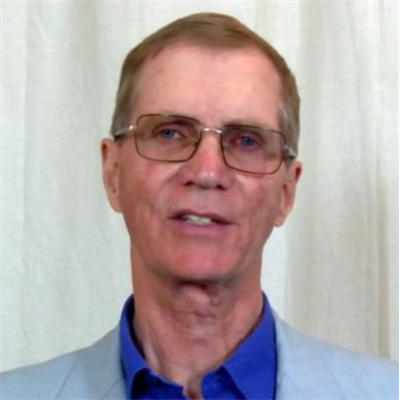 |
Two genres shaped the life of Lee Miller - Surrealism and the world of fashion. They informed each other and were both central to the way she saw the world. Her modeling career started with an accidental encounter with Conde Nast, proprietor of Vogue. She was a model for Lepape, Steichen, Genthe, Man Ray, Horst, Picasso and Roland Penrose. |
|
| Thursday, 13 May 2027 |
| Fire and Water: The Rivalry of Turner and Constable |
| Matthew Morgan |
 |
Two artists developed radically opposing approaches to the emotive power of landscape painting in Britain in the early 19th century. One was dramatic, bombastic and fiery, intending to provoke powerful emotions and elevated thoughts. The other was spiritual, heartfelt and closely observed, asking the viewer to react to an intense, inward and personal approach to nature. These two art-ists were JMW Turner and John Constable, the leading British artists of their day. Their lives were opposites as well. This lecture will explore their different approaches and their famous, bitter rivalry. |
|
| Thursday, 10 June 2027 |
| Postcards from Far & Near: Picturing the Twentieth Century |
| Chloe Sayer |
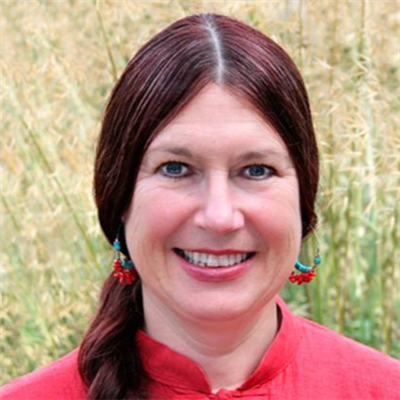 |
Postcards have pictured our history across the globe, documenting the changing role of women, the growth of cities, royalty, celebrity, cinema, aviation, cars, fashion, travel and more. They were bearers of news and repositories of memory. But now that we have mobile phones, is the age of the postcard over? |
|